 IN-V-BAT-AI — Your 🧠 Switch for Instant Recall
Drawing Complex Shapes is a Good Illustration of Intentionally Hidden Equation or Opague Algorithm
Students learns quickly by playing and doing. This interactive apps for drawing complex shapes will teach student the concept of whole numbers, positive integer, negative integer,
decimal numbers, and fractions.
Play with the whole numbers, integers, and decimals to see what new complex shape you can create instantly. This is a good exercise for training student to be creative and curious by asking ,
what will happen if I change this whole number or this decimal? See how excited they are in learning the number concept of negative integers, positive integers, whole numbers, decimal number,
and fractions.
Shown below is a good illustration that if student kept using the same number they should not expect to see changes in their drawing. Then you can connect this lesson to encourage them to study their lesson, do their homework assignment to acquire new input knowledge. With visualization they can see nothing will be added in their brain memory, if they don't acquire new input knowledge. Now ask them to learn by doing by changing new input number of integers, whole number, fraction, and decimal. Happy growing your input knowledge.
Practice using the generative drawing by changing some values to create new complex shape design.
The generalized equation of this generative AI is hidden only to you but it was available to the creator or programmer. It can be exposed and explain if needed.
Most modern generative-AI algorithms operate as black boxes, which makes them difficult to expose, retrace, repeat, or fully-explain. A single input can produce
many closely related predicted output, so the internal reasoning and hidden equations are not directly visible to
users.
But it should be possible to repeat or fully-explain if only we can take the snapshot of input numbers given. as you can see below. if your know the actual input number or weights you can repeat and explain the hidden equation or algorithm.
| 9000 | 2 | 93 | 4 | 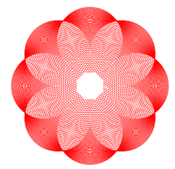 |
| 9000 | 21 | 94 | 0.12 | 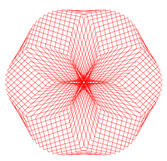 |
| 9000 | 2 | 93 | 0.15 | 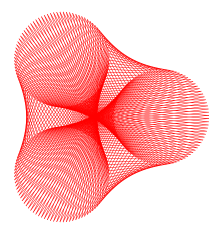 |
| 9000 | 2 | 93 | 0.17 |  |
| 9000 | 2 | 93 | 0.24 |  |
| 9000 | 2 | 93 | 0.4 | 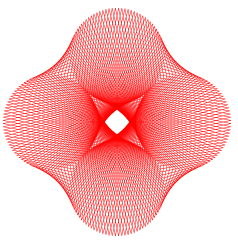 |
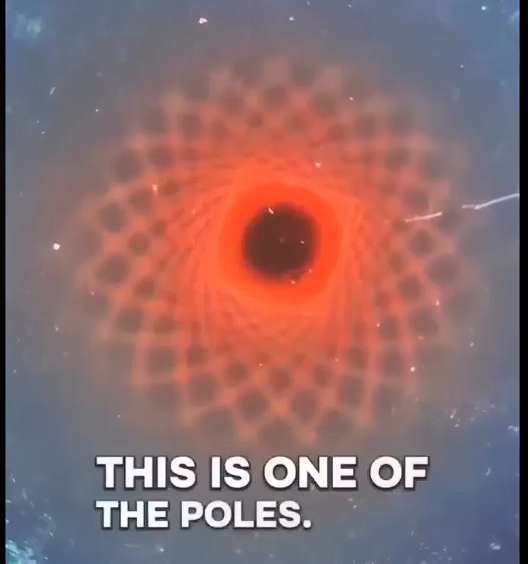
Ferroliquid is a liquid filled with tiny magnetic nanoparticles that makes us see the invisible magnetic field visible in real time.
| 1/32 = | 0.03125 |
| 1/16 = | 0.0625 |
| 1/8 = | 0.125 |
| 1/6 = | 0.16667 |
| 1/5 = | 0.2 |
| 1/4 = | 0.25 |
| 1/3 = | 0.3333 |
| 1/2 = | 0.50 |
| 5/8 = | 0.625 |
| 2/3 = | 0.6667 |
| 3/4 = | 0.75 |
| 7/8 = | 0.875 |
RELATED COMPLEX DRAWING
68
69
214
215
216
217
218
219
220
277
278
IN-V-BAT-AI helps you recall information on demand—even when daily worries block your memory. It organizes your knowledge to make retrieval and application easier. 🔗
Source: How People Learn II: Learners, Contexts, and Cultures
Copyright 2026
Never Forget Again with IN-V-BAT-AI
INVenting Brain
Assistant Tools
using Artificial Intelligence
(IN-V-BAT-AI)
Since
April 27, 2009
Unique visitors as of 9/11/2026 = 227,984
from 141 countries
April 27, 2009
Unique visitors as of 9/11/2026 = 227,984
from 141 countries